JA
EN
TOP

EXHIBITIONS

Akio Suzuki: “o to da te” in Tokyo Biennale 2025

EXHIBITIONS

Akio Suzuki: “o to da te” in Tokyo Biennale 2025

Ended
Type

Sound-walk

Venue

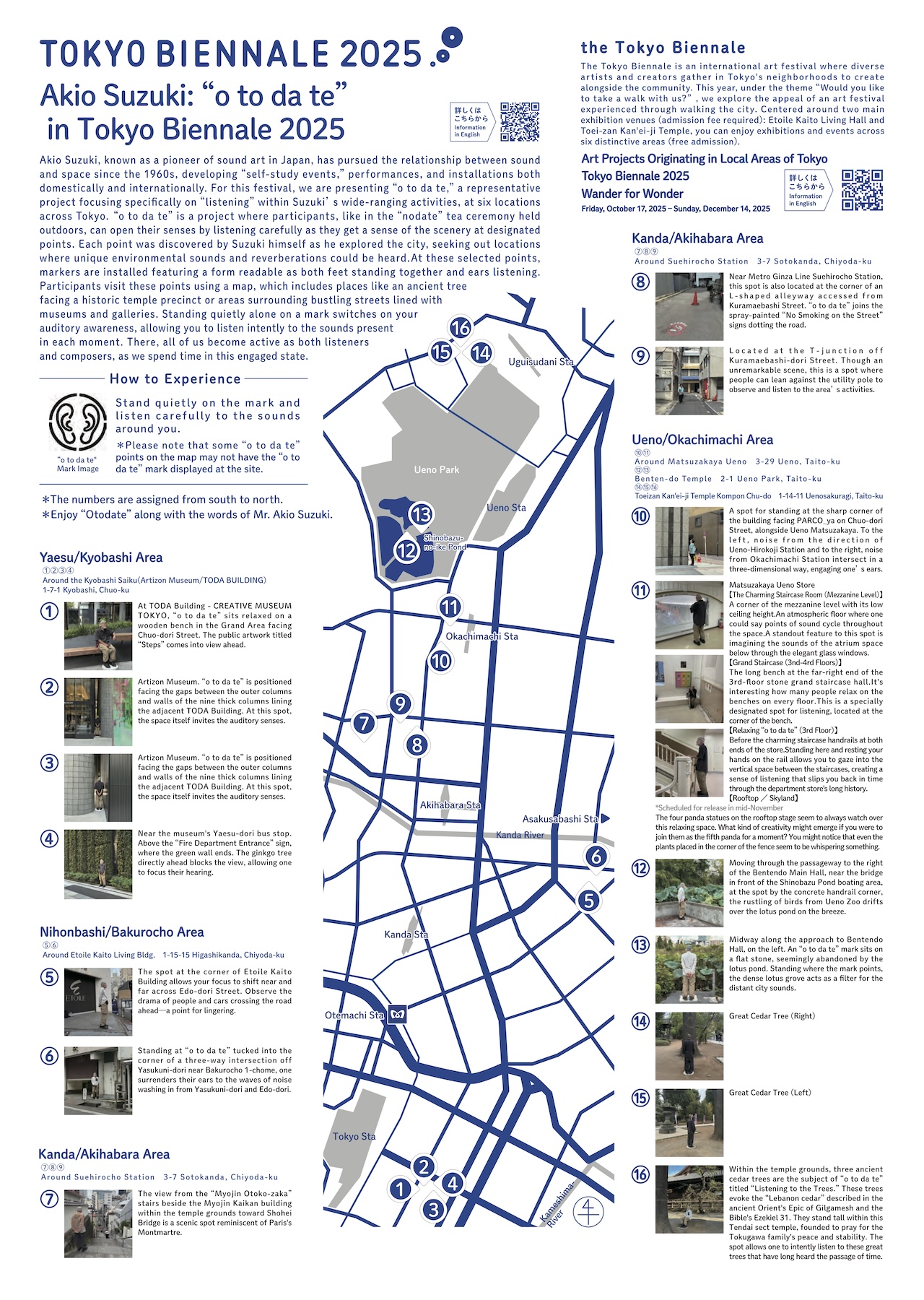
Yaesu/Kyobashi Area

①②③④ Around the Kyobashi Saiku
(Artizon Museum/TODA BUILDING)

1-7-1 Kyobashi, Chuo-ku

Nihonbashi/Bakurocho Area

⑤⑥ Around Etoile Kaito Living Bldg.

1-15-15 Higashikanda, Chiyoda-ku

Kanda/Akihabara Area

⑦ Myojin Otoko-zaka Stairs (Kanda Shrine)

2-16-2 Sotokanda, Chiyoda-ku

⑧⑨ Around Suehirocho Station

3-7 Sotokanda, Chiyoda-ku

Ueno/Okachimachi Area

⑩⑪ Around Matsuzakaya Ueno

3-29 Ueno, Taito-ku

⑫⑬ Benten-do Temple

2-1 Ueno Park, Taito-ku

⑭⑮⑯ Toeizan Kan'ei-ji Temple Kompon Chu-do

1-14-11 Uenosakuragi, Taito-ku

Date

10/17/2025 Fri. - 12/14 Sun.

Ticket

Free

“o to da te” in Tokyo Biennale 2025, 2025
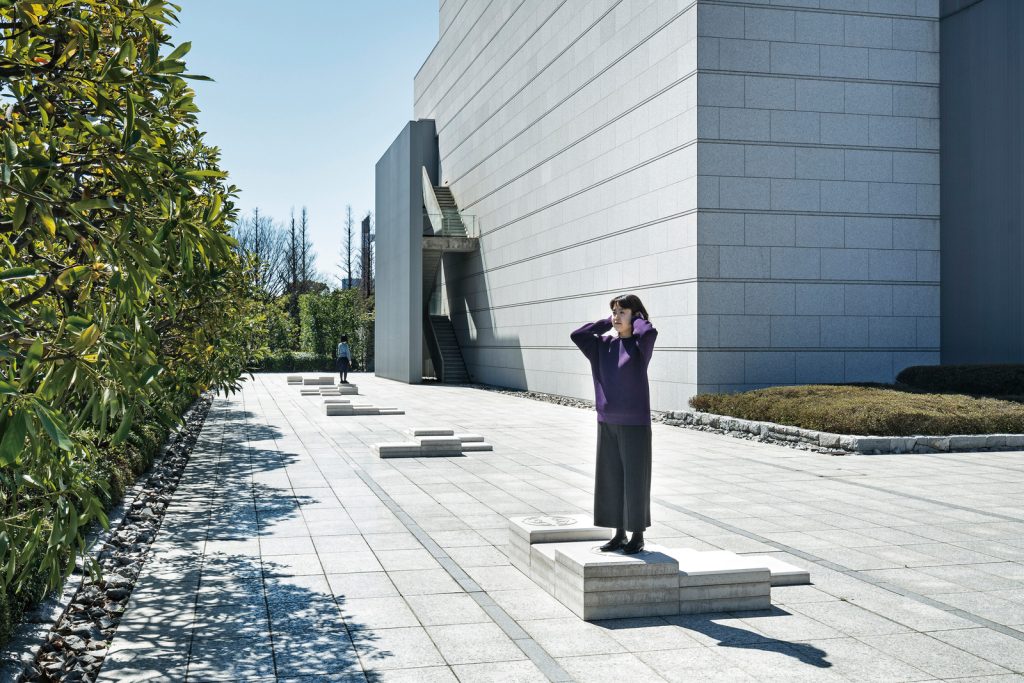
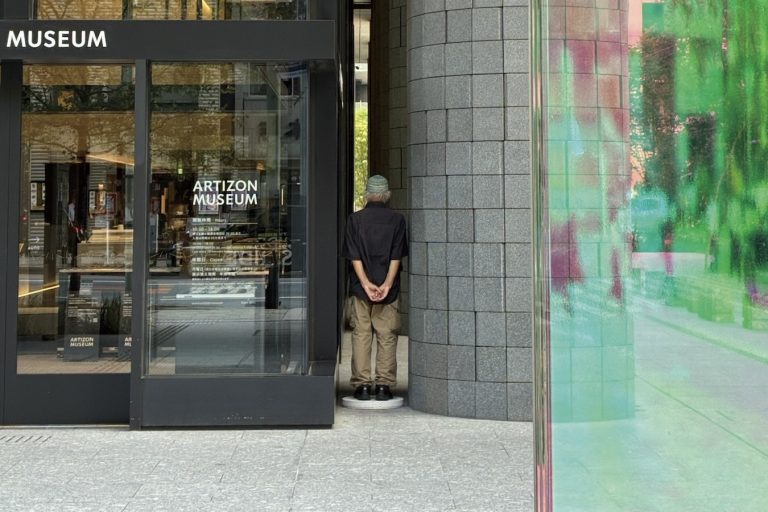
Around the Kyobashi Saiku (Artizon Museum/TODA BUILDING) Photo: YUKAI

Akio Suzuki, known as a pioneer of sound art in Japan, has pursued the relationship between sound and space since the 1960s, developing “self-study events,” performances, and installations both domestically and internationally. For this festival, we are presenting o to da te, a representative project focusing specifically on “listening” within Suzuki’s wide-ranging activities, at six locations (16 points) across Tokyo.

o to da te is a project where participants, like in the “nodate” tea ceremony held outdoors, can open their senses by listening carefully as they get a sense of the scenery at designated points. Each point was discovered by Suzuki himself as he explored the city, seeking out locations where unique environmental sounds and reverberations could be heard.


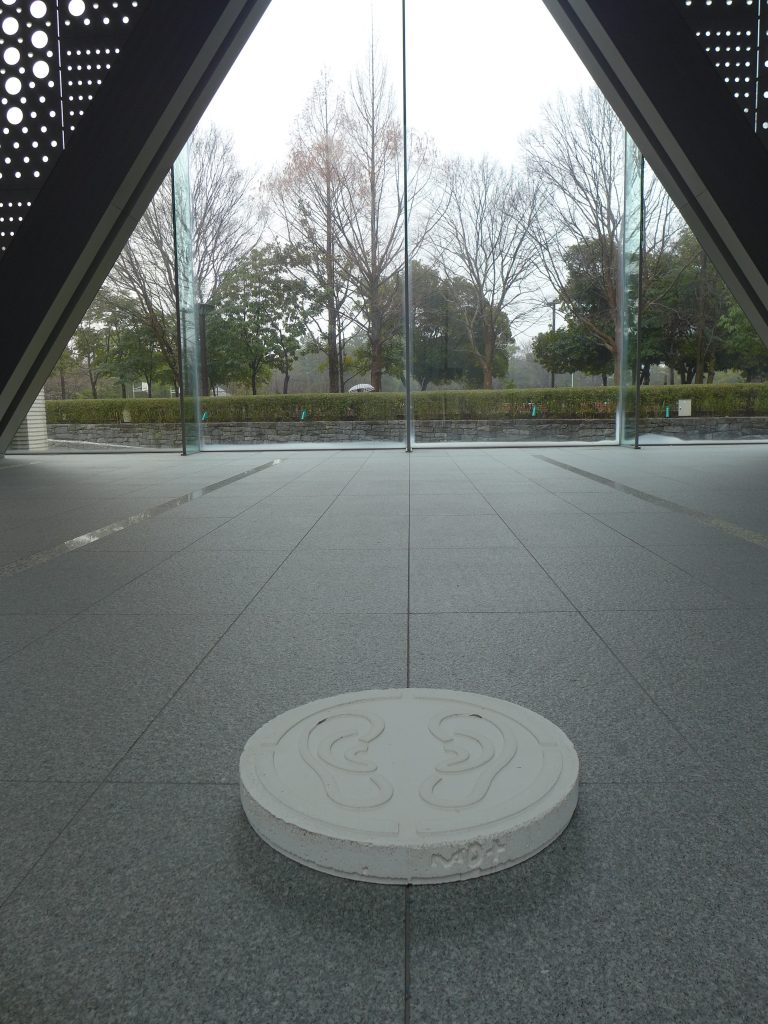
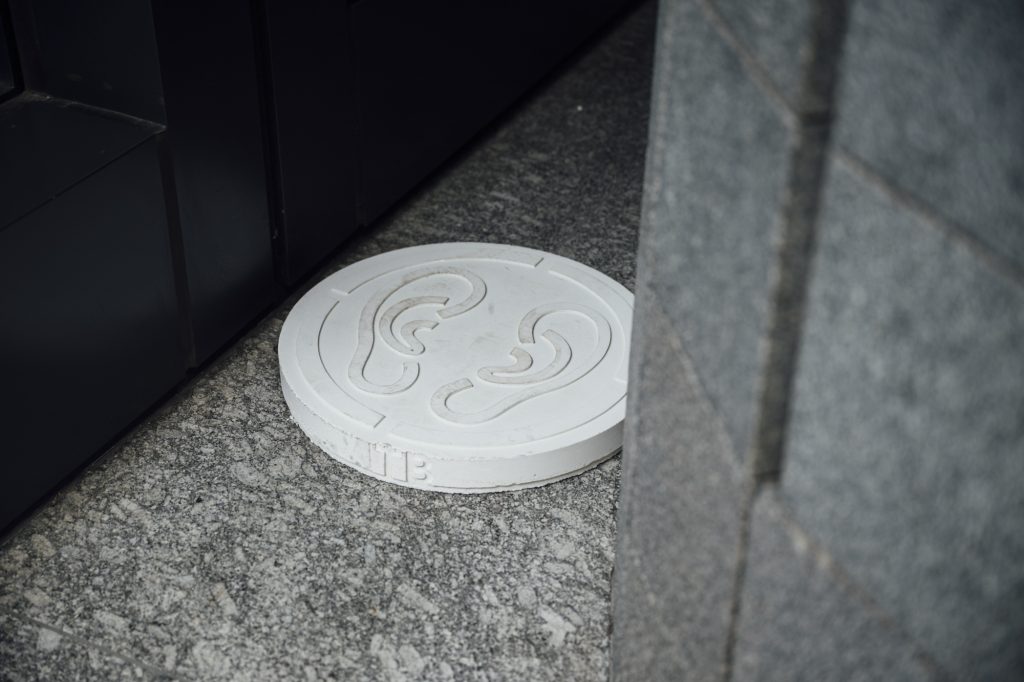
At these selected points, markers are installed featuring a form readable as both feet standing together and ears listening. Participants visit these points using a map, which includes places like an ancient tree facing a historic temple precinct or areas surrounding bustling streets lined with museums and galleries. Standing quietly alone on a mark switches on your auditory awareness, allowing you to listen intently to the sounds present in each moment. There, all of us become active as both listeners and composers, as we spend time in this engaged state.


Special Support: Ishibashi Foundation

Artists

Map


Handout with map (PDF: Japanese/English)

Related event

Listening to the Tokyo Biennale

  • Workshop
  • Tours
  • Sanpo

An Art Festival Experience That Doesn't Use Your Eyes / Listening to the Biennale with a Dialogue in the Dark Attendant

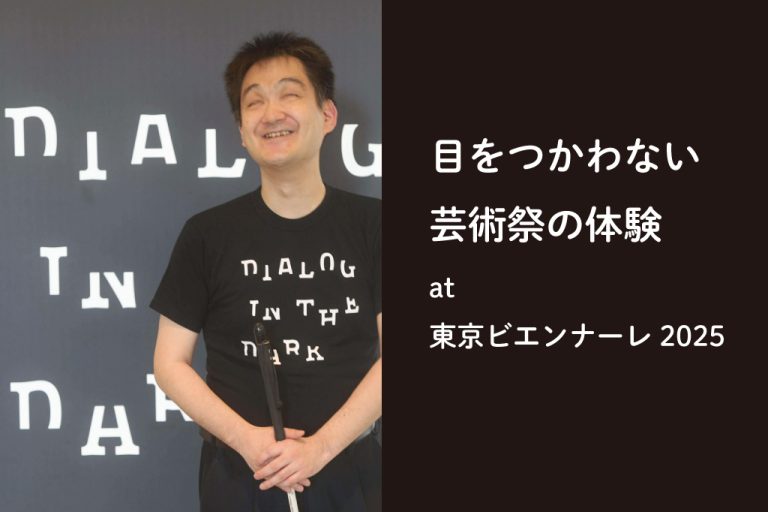
Dialogue in the Dark: Attending with Kinoppi (totally blind), we will experience Akio Suzuki’s “o to da te” at Tokyo Biennale 2025 and hold a discussion about our respective experiences. What kind of world does Kinoppi, who is totally blind, perceive through sound? We will walk together, stand in that space, and listen intently. When installing the “Oto-date” work,  Suzuki the artist taught us how to capture sound with our entire bodies. Standing in that same space alongside Kinnoppi, who is totally blind, promises to be a valuable experience. It will awaken a sense of sound perception different from our everyday lives. The Tokyo Biennale is an international art festival rooted in Tokyo. We look forward to discovering how its appeal can be experienced “without seeing.”   Walking Area We will explore the points of Suzuki Akio’s “o to da te” in Tokyo Biennale 2025 installed around Artizon Museum, then proceed to view Yonaha Shun’s TA・TA・TARO 2023 installed in the Tokyo Station Yaesu North Exit passageway.   Guide Michinori Kinoshita Known as Kinoppi. Dialog in the Dark attendant; totally blind. Born in 1979. Visually impaired from birth. Lost sight at age 16 and has been totally blind since. Graduated from the Acupuncture and Moxibustion Department of Tsukuba Technical College (now Tsukuba Technical University) in 2001. Active as a Dialog in the Dark (DID) attendant since 2004. Also handles corporate training sessions in darkness. Provided interview and research assistance for the book How Do Blind People See the World? by Aya Ito (Kobunsha Shinsho).   Kinoshita enjoying “o to da te” installed at Toeizan Kan’ei-ji Temple.   Kinoshita experiencing the art installation near the Artizon Museum.   What is Dialogue in the Dark? It is a social entertainment experience where participants, guided by visually impaired individuals, enjoy various senses and communication beyond sight within “100% pure darkness” where all light is completely blocked. Conceived in 1988 by German philosopher Dr. Andreas Heinecke, it has been held in approximately 50 countries, with over 9 million people experiencing it. In Japan, since its first event in November 1999, over 300,000 people have participated. It is currently held at the Dialogue Diversity Museum “Forest of Dialogue” in Takeshiba, Tokyo. At Tokyo Biennale 2025, we will dedicate time to learning about providing festival guidance for individuals with visual impairments and apply this knowledge to our visitor services. We have invited representatives from Dialogue in the Dark as instructors, listened to the perspectives of individuals who are fully blind and related stakeholders, considered what we can do, and have begun implementing initiatives.   From the records of the “Special Workshop” titled “Encouraging Participation in Art Festivals for Visually Impaired Individuals,” held for Tokyo Biennale 2025 operational part-time staff and volunteers (October 4, 2025).  Kinoppi (Michinori Kinoshita) and Shinsuke Shimura, Founder of Dialogue in the Dark Japan, attended and conducted the special workshop.
Ended 12/10/2025 / Around the Kyobashi Saiku
(Artizon Museum/TODA BUILDING)
  • Performance

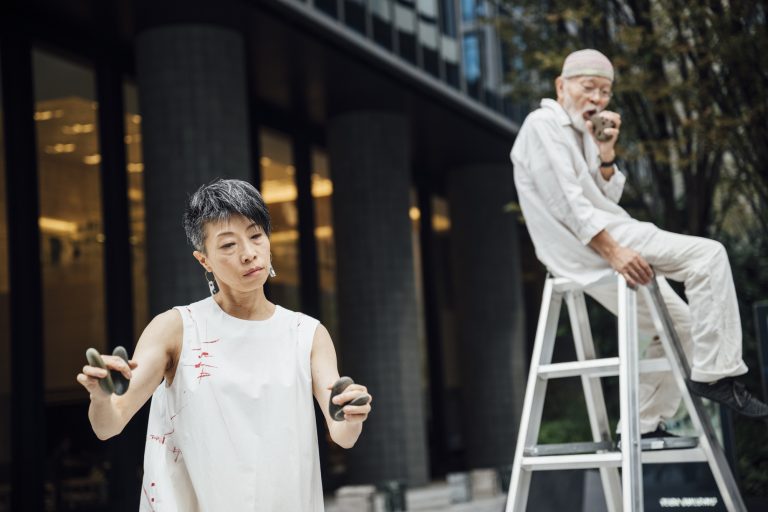
Hiromi Miyakita ・ Akio Suzuki | Performance "Garden of the Appellation / Maze Walking"

Eiji Watanabe presents his installation work Garden of the appellation / Etoile Kaito Installation at Etoile Kaito Living Building 7th floor. At this location, sound artist Akio Suzuki and performer Hiromi Miyakita will perform a collaboration with this Installation. This special performance was born from the encounter between Eiji Watanabe and Akio Suzuki.   Performers: Hiromi Miyakita, dance “Butterfly Mindlessly Seeks Flowers”; Akio Suzuki, “Sound Staff”   Eiji Watanabe , Garden of the Appellation / Etoile Kaito Installation, 2025. Installation view at Etoile Kaito Living Building. Photo by Yuka Ikenoya (YUKAI)   Comments by Eiji Watanabe on the Performance I first met the two artists when I invited them to participate in an art project I co-founded with Obu City, Aichi Prefecture in 2021 (guest curator: Satsuki Yamamoto). There have been two previous collaborations with “The Garden of the Appellation.” One was in 2004, proposed by eca UNION (Edinburgh College of Art Students’ Union) at the Sculpture Court (a multipurpose space). The idea involved bringing about 100 alarm clocks into “The Garden of Names,” where they would begin ringing amidst the flowers like insect sounds, each with a different tone. The other was during my participation in ArtZuid 2017, the Amsterdam International Sculpture Biennale. Within the “Garden of Names” spread across the exhibition site, the Art Chapel, artist Paul Goede presented Mental Color. Since both were collaborations involving sound, the image of collaborating with Mr. Akio Suzuki and Mr. Miyakita, who I worked with at the Tokyo Biennale this time, naturally came to mind.   “o to da te” in Tokyo Biennale 2025 performance in front of the Artizon Museum, Tokyo, October 16, 2025. Photo by Yuka Ikenoya (YUKAI)   Since our connection began at the Art of List exhibition (Obu, Aichi), I found myself drawn to Eiji’s “Garden of the Appellation” at the Tokyo Biennale 2025. Tiptoeing, shuffling, the two wanderers rely on sound…
Ended 12/12/2025 / Etoile Kaito Living Bldg.

Reference image: An Encouragement of Dawdling; "o to da te" and "no zo mi," 2018–2019
Collection of the Museum of Contemporary Art Tokyo
Reference Image: An Encouragement of Dawdling "o to da te" and "no zo mi (ki zu ki – 2),", 2018–2019.
Museum of Contemporary Art Tokyo
← →

Courtesy of Beethoven Foundation for Art and Culture Bonn / Photo by Meike Boeschemeyer

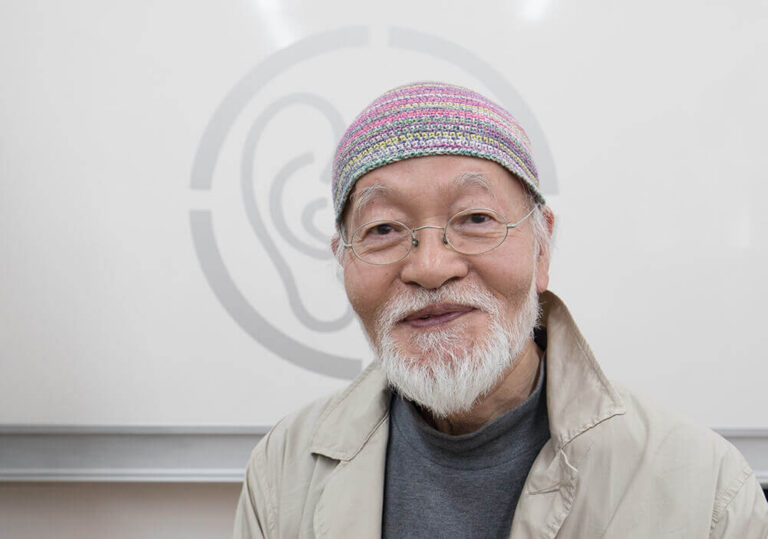
Akio Suzuki

Sound artist. Born in 1941. Since his infamous Throwing Objects Down a Staircase event at Nagoya Station in 1963 and the self study events which followed, where he explored the processes of “projection” and “following” in the natural world, Suzuki has pursued listening as a practice. In the 1970s he created and began performing on a number of original instruments, including the echo instrument Analapos. In 1988 he performed his piece Space in the Sun, which involved purifying his ears for twenty four hours in nature on the meridian line that runs through Amino, Kyoto. In 1996, he began his “oto da te” project where he seeks out echo points in the urban environment. Has performed and exhibited at many venues and music festivals around the world, including Documenta8 (Germany,1987), the British Museum (2002), Musée Zadkine (France, 2004), Kunstmuseum Bonn (Germany, 2018), Museum of Contemporary Art Tokyo(Tokyo, 2019), etc.

Ueno/Okachimachi Area

Kanda/Akihabara Area

Nihonbashi/Bakurocho Area

Yaesu/Kyobashi Area

①Toeizan Kan'ei-ji Temple Kompon Chu-do

⑫⑬ Benten-do Temple

⑩⑪ Around Matsuzakaya Ueno

⑧⑨ Around Suehirocho Station

⑤⑥ Around Etoile Kaito Living Bldg.

①②③④ Around the Kyobashi Saiku
(Artizon Museum/TODA BUILDING)